Sanofi — Badge of Honor (United States)
GRAND PRIX — 2026 Marketing Makes a World of Difference™ Awards
Sanofi transformed the small scar left by living kidney donation into a symbol of extraordinary generosity—and created a clearer path for people willing to consider becoming donors themselves.
Submitted by Havas Media North America
Winner’s Citation
For turning human insight into meaningful action—reframing the scar of living kidney donation as a badge of honor and creating a clear, supportive path that moved people from considering an extraordinary act to taking the first step toward it.
How It Makes a World of Difference
Some of the most consequential decisions a person can make begin with something remarkably small.
In the United States, approximately 90,000 people are waiting for a kidney. Yet altruistic living kidney donors—people willing to donate a kidney to someone they do not know—are exceptionally rare, with fewer than 300 people each year choosing to take that step.
Sanofi wanted to understand what might move someone toward such an extraordinary decision.
Research combined social listening, surveys, AI-powered analysis of donor conversations and modeling of potential donors’ motivations and beliefs. A pattern emerged: potential altruistic donors were motivated by purpose, humanity and the belief that one meaningful act could profoundly change another person’s life. They also wanted trustworthy information that would help them understand what donation actually involved.
That led to a deceptively simple creative idea.
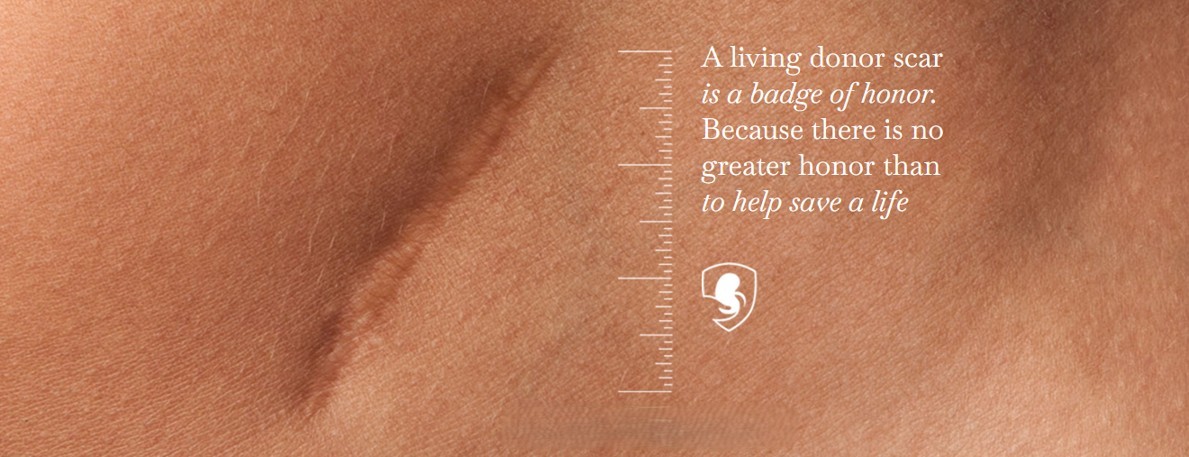
The scar left by living kidney donation is only about three inches long. Instead of presenting it as evidence of surgery or sacrifice, Sanofi reframed it as something else:
a badge of honor.
The scar became a visual symbol of the enormous difference one relatively small mark could represent. Rather than relying on the emotional appeals often associated with organ donation, the campaign used that symbol to invite people to imagine themselves taking action.
But inspiration alone wasn’t enough.
When people responded to the social campaign, they entered a digital experience designed to answer the practical questions that could otherwise stop consideration from becoming action. Visitors could learn about surgical procedures, recovery times and success rates—and, when ready, connect directly with a nearby transplant center with a single click.
The campaign therefore did two things at once.
It changed what the scar meant. And it made the next step easier to take.
The Difference Marketing Made
Marketing didn’t simply change how people thought about kidney donation. It moved people toward becoming kidney donors.
That is what makes Badge of Honor such a powerful example of marketing making a world of difference.
The creative idea opened an emotional door. The information experience reduced uncertainty. And the connection to transplant centers gave people a direct route from intention toward action.
In that sense, the campaign didn’t end when someone noticed the scar, watched the film or visited the website.
That was where the consequential part began.
The pilot launched in Houston, where more than 4,000 people were awaiting transplants. Rather than measuring success primarily through awareness or engagement, the most important question became much more demanding:
Would anyone actually raise their hand to become a living kidney donor?
They did.
Something meaningful happened because marketing got involved: people moved from encountering an idea to taking a potentially life-changing first step.
Results That Make a Difference
Before Badge of Honor, Houston had recorded one altruistic living kidney donor application in the preceding 12 months.
In the four months following launch, there were 85 applications—a reported increase of 25,400%.
The campaign also generated 27.4 million social impressions and 133,400 unique website visits, with visitors spending longer engaging with transplant information than comparable brand benchmarks.
But those numbers are secondary to the 85.
They represent applications, not completed kidney donations, and the distinction matters. No campaign can determine what ultimately happens medically.
What marketing could do—and did—was help substantially more people reach the point of saying:
I am willing to explore this.
For an act as rare and consequential as altruistic living kidney donation, that is an extraordinary behavioral shift.
A three-inch scar became a different kind of symbol. Information became a route through uncertainty. And communication became a catalyst for action.
Sometimes the difference marketing makes can be measured in something as simple—and as profound—as the number of people willing to step forward.
Continue Exploring Marketing Makes a World of Difference™ 2026
SEE ALL THE WINNERS
Explore the complete 2026 Marketing Makes a World of Difference™ winners and case studies.
EXPLORE THE TRENDS
Discover the signals, patterns and ideas emerging from this year’s winning work—and what they suggest about marketing’s changing role.